
Santa Sindone (Holy Shroud)
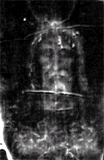
It is the holy pall in which, according to the
evangelic narration (Matt. 27:59; Mark 15:46; Luke 23:52), the body
of Jesus Christ was wrapped when he was placed in the
sepulchre.
There were records about the existence of the holy shroud beginning
in the 7th century. At first it was believed that it was
kept in Jerusalem, then in Constantinople, but later on, various
cities contended for the possession of it ( Compiègne,
Besançon, Cadouin, etc).
According to the most reliable studies, the holy shroud worthy of
greatest reliability seems to be the one pertaining to the property
of the House of Savoy in 1453 after several peregrinations: already
venerated in Lirey from 1350 and then in
Chambéry, it is now kept in the chapel of the Holy
Shroud in Turin.
In 1997 a fire destroyed a good part of the chapel and the holy
shroud, saved by the Fire Service, was kept in a secret place up to
the ostension planned for the following April, to then be once
again held in the duomo di Torino(Turin cathedral) in a new
reliquary protected from particular technologies.
sheet of linen of, on which the double image, frontal and dorsal,
of a human body is printed. As to the nature of this image many
discussions have been sparked: moreover it seems possible to admit
that it is truly a question of a sheet used to wrap a corpse; the
image, which appears in negative, could have been determined by the
fixing onto the material, due, for example to the sweat, in
correspondence with the zones of contact with the skin, of aromatic
substances spread onto the fabric itself.
The ecclesiastical authority, though allowing the veneration of the
Holy Shroud, has never declared its authenticity, putting in doubt
also by numerous scientific tests. In 1988, the cardinal
Bellestrero communicated that the surveys carried out with
carbon-14 dating at three universities (Arizona, Oxford and
Zürich) dated the pall as going back to the years 1260-1390;
the relic keeps, however, its value as an object of worship. The
festivity of the Holy Shroud is celebrated the Friday following the
second Sunday of Lent.




Ciao,
mi chiamo Stefano.
Piemonte Sacro è la mia passione dal 2001.
AIUTA il progetto Piemonte Sacro a crescere
DONA SOLO 2 euro! Te ne sarò GRATO .
Compra una collana RELIGIOSA in Acciaio Inox su Ebay
-
Collana in Acciaio Inox Color Oro 60 cm - Ciondolo CROCE JESUS
4,99 €
-
Collana Color Oro in Acciaio Inox 60 cm - Ciondolo CROCE RIPIENA
4,99 €
-
Collana Color Oro in Acciaio Inox 60 cm - Ciondolo GESU' SULLA CROCE
6,99 €
-
Collana in Acciaio Inox Color Oro 60 cm - Ciondolo CROCE GRANDE
6,99 €
-
Collana in Acciaio Inox Color Oro 60 cm - Ciondolo CROCE e MANI GIUNTE
4,99 €
-
Collana in Acciaio Inox Color Oro 60 cm - Ciondolo CROCE GRANDE con GESU'
6,99 €
-
Collana Color Oro in Acciaio Inox 60 cm - Ciondolo GESU' BENEDICENTE
4,99 €
-
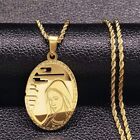
Collana in Acciaio Inox Color Oro 60 cm - Ciondolo VISO DELLA VERGINE MARIA
6,99 €
-
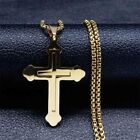
Collana in Acciaio Inox Color Oro 60 cm - Ciondolo CROCE TRILOBATA
4,99 €